

Technology has accelerated a strange paradox in the world of words.
Now that ChatGPT and other large language models can generate text faster and cheaper than any point in history, fewer people are interested in reading them.
Odd to point out, but is it that surprising?
Writing — generally and historically a difficult task even for professionals — has become effortless in the same moment reading is rare.
A new study from the University College of London and the University of Florida concluded the share of Americans 15 or older who read from a book or magazine every day has cratered over the last 20 years.
It peaked at 28% in 2004 and now hovers at about 16%.
The share of parents reading with children has also fallen, though not as precipitously.
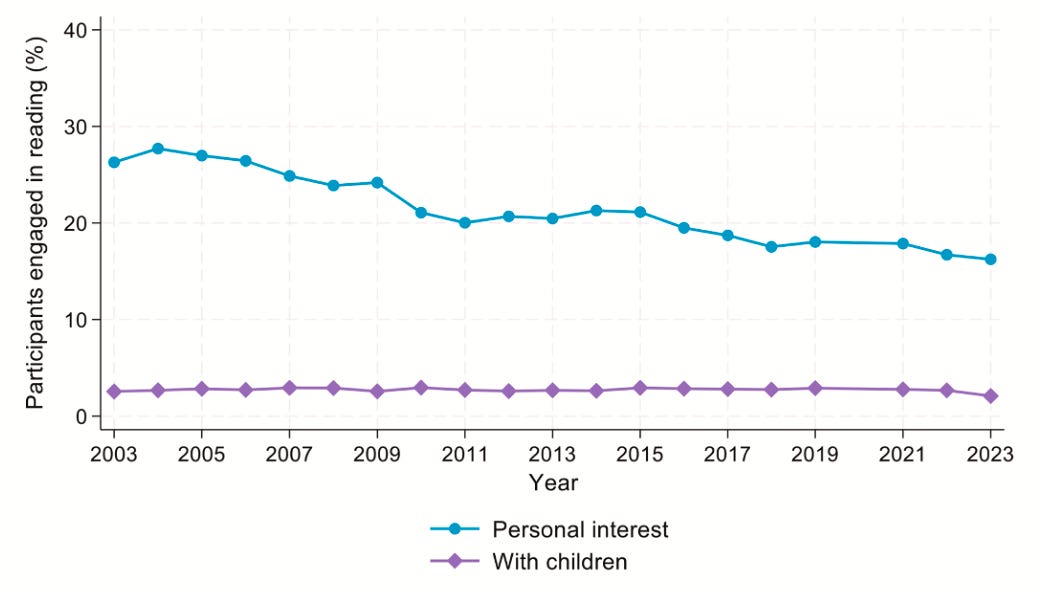
My guess is, for most people, it wouldn’t be that difficult to arrive at similar conclusions anecdotally among friends and family.
The sharp decline in reading isn’t so much a story of shifting tastes but one of crowding out.
We do live in the “attention economy,” after all. Boring old-fashioned books can’t compete with the dopamine that comes from TikTok videos, infinite scrolling apps, and algorithms that know how to tickle your most based preferences.
Reading is slow and linear and have a beginning and end.
Screens are fast, engineered and endless.
The irony is that just as reading diminishes, the supply of words is exploding.
AI makes it possible to churn out entire books in a minutes. What once took years of discipline and headache can now be automated.
For this reason I’ve come to approach new release titles — those in the post-ChatGPT era — with skepticism as to whether the author really wrote the thing.
It’s a different feeling than learning of a celebrity author’s ghostwriter. What requires less human effort to create becomes inherently less human to consume.
To me, the idea of an AI-generated book conveys a sense of foul play.
My own experience as a young author feels relevant.
I published two books — the first a collection of travel essays, the second a collection of fiction — two years before ChatGPT changed the world.
[If you’re interested, my books are available on Amazon.]
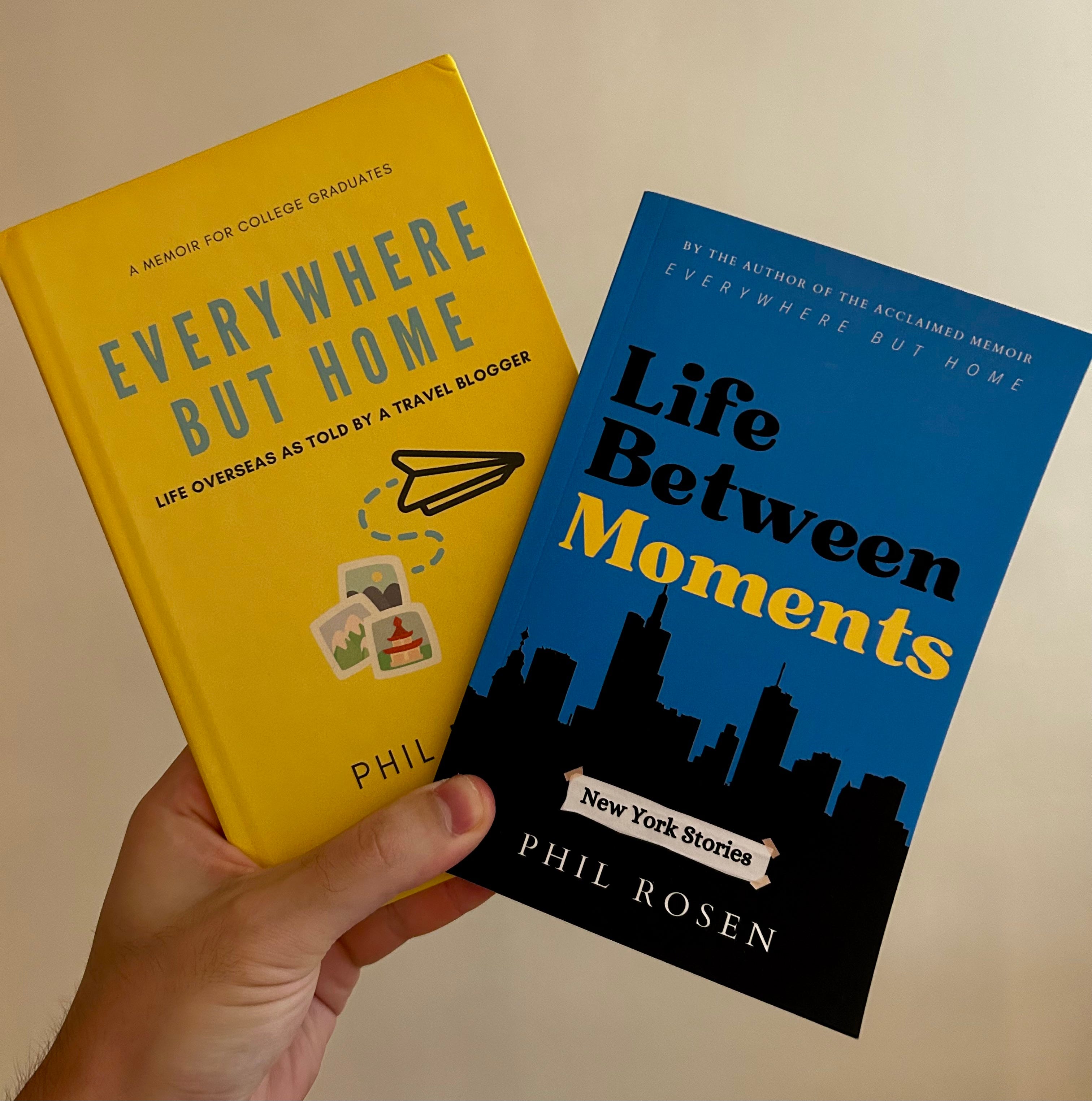
I was proud to have written them at the time, but with the advent of AI, I feel renewed pride that I had it in me to craft two books without any technological shortcut.
That is the paradox of this moment.
The flood of machine-made words will likely accelerate Americans’ already-flatlining reading habits. It cannot be productive for anyone that the loop between writing and reading is snapping in real time.
If both sides collapse (that is, if we stop reading and we stop writing) then words will be relegated to content — the same category as TikTok or Netflix, untethered from the attention and effort that once made them possible.
One lesson I’ve learned from a lifetime of books is that indifference has never made good work better.
Phil Rosen
Co-founder & Editor-in-Chief, Opening Bell Daily
Thank you for reading. If you enjoyed this post, consider hitting the “like” button to help boost visibility. If the ideas resonated, I’d love to hear why — reply directly to this email or leave a comment below.
"What requires less human effort to create becomes inherently less human to consume."
Totally agree